Medicine is one of the most respected professions in Nigeria, but it is also one of the longest career paths to complete.
Many students dream of becoming consultant doctors because of the prestige, expertise, and higher earning potential associated with the role. However, reaching consultant status requires years of education, clinical training, examinations, and professional development.
A common question among aspiring medical students is: How long does it actually take to become a consultant doctor in Nigeria?
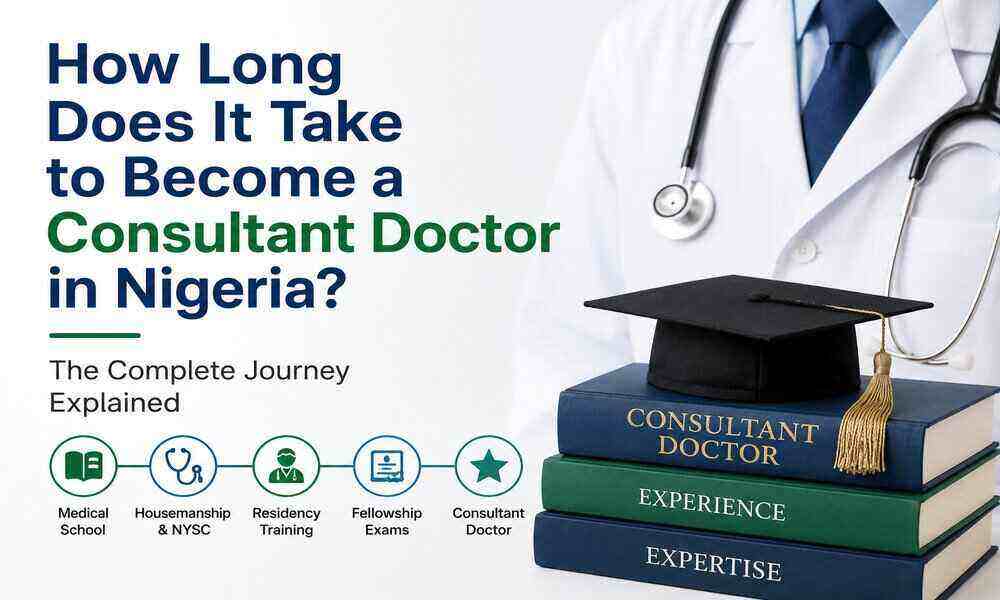
The short answer is that it typically takes between 12 and 18 years, depending on your chosen specialty, training progression, and examination success.
This guide explains every stage of the journey from medical student to consultant doctor in Nigeria.
Who Is a Consultant Doctor?
A consultant doctor is a fully trained specialist who has completed all required postgraduate medical training and professional examinations in a specific field of medicine.
Consultants are considered experts in their specialties and often supervise junior doctors, resident doctors, and medical students.
Examples of medical specialties include:
- General Surgery
- Pediatrics
- Internal Medicine
- Obstetrics and Gynecology
- Cardiology
- Orthopedics
- Neurology
- Radiology
- Psychiatry
- Anesthesiology
Consultants are typically responsible for managing complex medical cases and making high-level clinical decisions.
Step 1: Complete Secondary School (6 Years)
Before entering medical school, students must complete their secondary education.
At this stage, students focus heavily on science subjects such as:
- Biology
- Chemistry
- Physics
- Mathematics
- English Language
Strong academic performance is usually necessary for admission into medical school.
Time Required: 6 years
Step 2: Gain Admission into Medical School
Admission into Medicine and Surgery programs in Nigeria is highly competitive.
Students typically gain admission through:
- UTME (JAMB)
- Direct Entry
- Transfer programs (rare cases)
Most universities require high scores and excellent academic records.
Time Required: Several months to 1 year
Consultants represent the highest-paid category of doctors. See our comparison of Government vs Private Hospital Salaries for Doctors in Nigeria to understand where specialists often earn more.
Step 3: Study Medicine and Surgery (MBBS)
Medical school is where future doctors receive professional training.
The MBBS program generally lasts six years in most Nigerian universities.
The program includes:
Pre-Clinical Years
Students learn:
- Anatomy
- Physiology
- Biochemistry
Clinical Years
Students receive hospital-based training in:
- Internal Medicine
- Surgery
- Pediatrics
- Obstetrics and Gynecology
- Community Medicine
- Psychiatry
Upon graduation, students earn the Bachelor of Medicine, Bachelor of Surgery (MBBS) degree.
Time Required: 6 years
Step 4: Housemanship (Medical Internship)
After obtaining an MBBS degree, graduates undergo a compulsory one-year internship known as Housemanship.
This stage allows newly qualified doctors to gain practical experience under supervision.
Doctors rotate through key departments including:
- Medicine
- Surgery
- Pediatrics
- Obstetrics and Gynecology
The internship helps bridge the gap between classroom learning and independent medical practice.
Time Required: 1 year
Step 5: National Youth Service Corps (NYSC)
Following Housemanship, doctors participate in the National Youth Service Corps program.
During NYSC, many doctors work in hospitals, clinics, and healthcare centers across Nigeria.
This year provides additional clinical exposure and work experience.
Time Required:
1 year
Step 6: Obtain Full Medical Registration
After completing Housemanship and NYSC, doctors become fully licensed medical practitioners.
At this point, they can work as Medical Officers in government or private hospitals.
Some doctors choose to practice as general physicians, while others pursue specialist training.
Time Required:
Immediately after NYSC
Step 7: Apply for Residency Training
Doctors who want to become consultants must enter a residency training program.
Residency is the official specialist training pathway in Nigeria.
To qualify, doctors typically sit for postgraduate examinations conducted by:
- National Postgraduate Medical College of Nigeria (NPMCN)
- West African College of Physicians (WACP)
- West African College of Surgeons (WACS)
Passing these examinations is often required before progressing through specialist training.
Time Required:
6 months to 2 years depending on admission and exam success
Step 8: Residency Training
Residency is the longest and most demanding stage of becoming a consultant.
Doctors receive advanced training in their chosen specialty while working in accredited teaching hospitals.
Junior Residency
This phase focuses on foundational specialist training.
Doctors prepare for Part I postgraduate examinations and gain clinical experience.
Senior Residency
After passing required exams, doctors move into senior residency.
Responsibilities increase significantly as they begin handling more complex cases.
Typical Duration of Residency
| Specialty | Estimated Training Period |
|---|---|
| Internal Medicine | 5–7 years |
| Pediatrics | 5–7 years |
| General Surgery | 6–8 years |
| Obstetrics & Gynecology | 5–7 years |
| Orthopedic Surgery | 6–8 years |
| Psychiatry | 5–6 years |
| Radiology | 5–6 years |
| Anesthesiology | 5–6 years |
Time Required: 5–8 years
Many newly qualified specialists also explore international opportunities. Learn more in our article on Countries Nigerian Doctors Are Relocating To and Why.
Step 9: Pass Fellowship Examinations
Before becoming a consultant, doctors must successfully complete fellowship examinations.
These examinations test:
- Clinical knowledge
- Research competence
- Specialist skills
- Professional judgment
Successful candidates earn Fellowship status from recognized postgraduate medical colleges.
Examples include:
- FWACP
- FMCP
- FMCS
- FWACS
These qualifications represent the highest levels of specialist medical training in West Africa and Nigeria.
Time Required: Included within residency training
Step 10: Appointment as Consultant
After completing residency and obtaining fellowship qualifications, doctors become eligible for appointment as consultants.
At this stage, they can:
- Lead specialist teams
- Supervise resident doctors
- Conduct advanced procedures
- Teach medical students
- Hold senior hospital positions
- Establish specialist private practices
This marks the highest clinical level in the medical profession.
Total Time Required to Become a Consultant Doctor
The timeline varies depending on specialty and training progression.
| Stage | Duration |
| Secondary School | 6 years |
| MBBS Degree | 6 years |
| Housemanship | 1 year |
| NYSC | 1 year |
| Residency Training | 5–8 years |
| Total | 13–16+ years |
In some cases, examination delays, residency placement challenges, or additional academic pursuits can extend the process to 18 years or more.
Is Becoming a Consultant Worth It?
Although the journey is long, many doctors consider consultant status one of the most rewarding achievements in medicine.
Benefits include:
- Higher earning potential
- Greater professional respect
- Leadership opportunities
- Advanced specialist expertise
- Academic and research opportunities
- Increased career flexibility
Consultants also play a critical role in shaping the next generation of doctors through teaching and mentorship.
Challenges Along the Journey
The path to becoming a consultant is demanding.
Common challenges include:
- Intense academic workload
- Competitive examinations
- Long working hours
- Emotional and physical stress
- Limited residency positions
- Financial sacrifices during training
Despite these obstacles, thousands of Nigerian doctors successfully complete the journey every year.
Conclusion
Becoming a consultant doctor in Nigeria is a long-term commitment that typically takes between 13 and 16 years, with some specialties requiring even more time.
From medical school and internship to residency training and fellowship examinations, each stage builds the expertise required to practice at the highest level of medicine.
While the journey is challenging, consultant doctors enjoy significant professional recognition, career opportunities, and the ability to make a lasting impact on patient care and healthcare development in Nigeria.