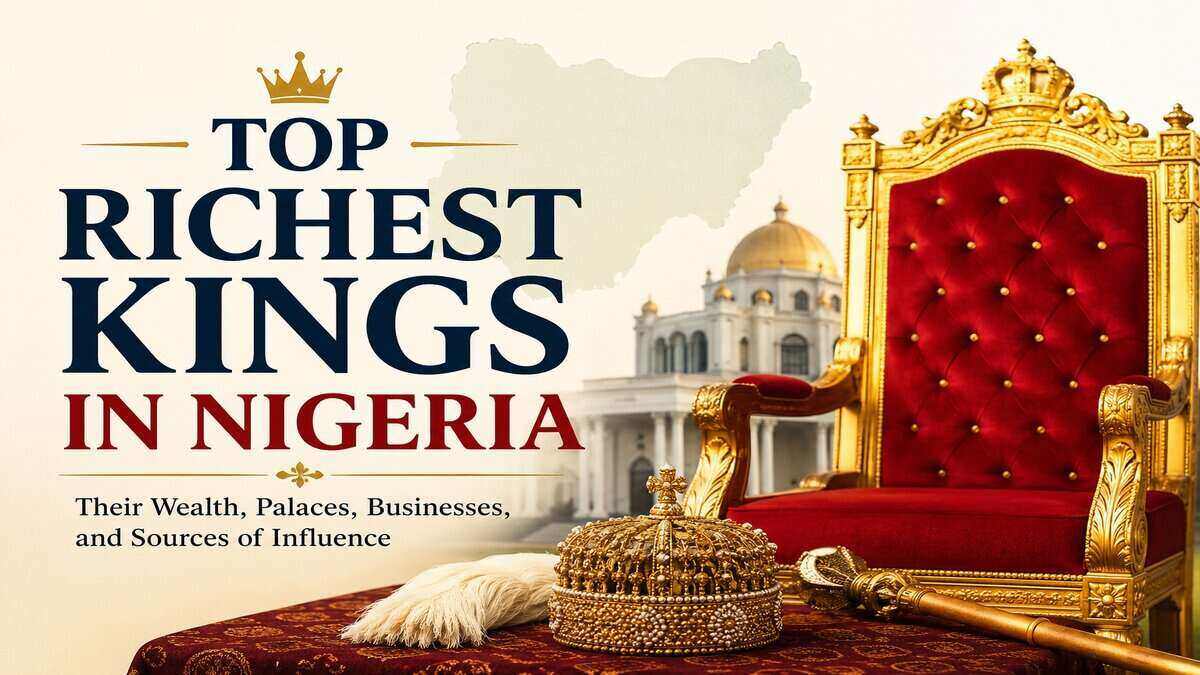
Nigeria is home to some of Africa’s most respected traditional institutions. Long before modern politics and democratic governance, kingdoms and emirates served as centres of power, culture, commerce, and leadership. Even today, traditional rulers remain highly influential figures whose voices carry weight in social, political, and economic matters.
This influence has naturally led many Nigerians to ask an interesting question: who are the richest kings in Nigeria?
While it is difficult to determine the exact net worth of traditional rulers because most do not publicly disclose their assets, several monarchs are widely regarded as among the wealthiest traditional rulers in the country due to their business interests, family wealth, royal assets, investments, and strategic influence.
It is important to note that most wealth estimates associated with Nigerian monarchs are unofficial and often based on public reports, historical records, business affiliations, and visible assets rather than verified financial disclosures.
Also Read : List of Obas in Yorubaland
In this article, we examine some of the richest kings in Nigeria, their kingdoms, sources of wealth, businesses, palaces, and the influence they wield within and beyond their domains.
How Nigerian Traditional Rulers Build Wealth and Influence
Unlike in ancient times when kings directly controlled vast territories and resources, modern Nigerian monarchs derive their influence and wealth from several sources.
Family and Inherited Wealth
Many traditional rulers come from wealthy royal families with generations of accumulated assets, including land, investments, and businesses.
Private Business Interests
Some monarchs built successful careers in banking, engineering, oil and gas, telecommunications, law, or entrepreneurship before ascending the throne.
Real Estate Holdings
Land ownership remains one of the biggest sources of wealth among many traditional institutions. Several royal families control large property portfolios in major cities.
Government Recognition and Influence
Although traditional rulers do not officially govern states, they often serve as advisers, mediators, and community leaders, giving them significant influence in economic and political matters.
Investments and Corporate Connections
Some monarchs maintain strong ties with major corporations, foundations, and investment ventures established before or during their reign.
The Richest Kings in Nigeria
1. The Ooni of Ife, Oba Adeyeye Enitan Ogunwusi
Kingdom
Oba Adeyeye Enitan Ogunwusi is the Ooni of the ancient Yoruba kingdom of Ife in Ile-Ife.
Historical Background
The Ooni of Ife is regarded as one of the most revered traditional rulers in Yorubaland. The throne traces its origins to centuries-old traditions that many Yoruba people consider foundational to their history.
Sources of Wealth
Before becoming king in 2015, Oba Ogunwusi was already a successful entrepreneur and investor.
His interests reportedly include:
- Real estate development
- Construction projects
- Hospitality investments
- Commercial property holdings
- Agricultural initiatives
He founded companies involved in engineering and property development long before ascending the throne.
Why He Is Considered Among Nigeria’s Richest Monarchs
His extensive business background, high-profile investments, and international engagements have contributed significantly to his reputation as one of Nigeria’s wealthiest traditional rulers.
Interesting Fact
The Ooni has actively promoted cultural diplomacy, attracting global attention to Yoruba heritage and traditional institutions.
2. The Sultan of Sokoto, Alhaji Muhammad Sa’ad Abubakar III
Kingdom
Muhammad Sa’ad Abubakar III serves as the Sultan of Sokoto and spiritual leader for millions of Muslims across Nigeria.
Historical Background
The Sultanate traces its roots to the historic Sokoto Caliphate established in the early nineteenth century.
Sources of Wealth
Before becoming Sultan, he served as a senior military officer in the Nigerian Army.
His influence is linked to:
- Family heritage
- Investments
- Royal assets
- Agricultural interests
- Institutional leadership roles
Why He Is Considered Among Nigeria’s Richest Traditional Rulers
The Sultan presides over one of Africa’s most respected traditional institutions, giving him enormous social and cultural influence.
Interesting Fact
Beyond traditional leadership, the Sultan is widely respected for promoting interfaith dialogue and national unity.
3. The Obi of Onitsha, Igwe Nnaemeka Alfred Achebe
Kingdom
Nnaemeka Alfred Achebe is the Obi of Onitsha in Onitsha.
Historical Background
Onitsha is one of Nigeria’s most commercially significant traditional kingdoms, located on the banks of the River Niger.
Sources of Wealth
Before ascending the throne, Igwe Achebe had an accomplished corporate career.
His background includes:
- Banking
- Corporate leadership
- Energy sector experience
- Investments
- Board memberships
He previously held executive positions within major multinational companies.
Why He Is Considered Wealthy
His corporate achievements and extensive professional experience distinguish him from many traditional rulers.
Interesting Fact
He is a distant relative of renowned author Chinua Achebe.
4. The Emir of Kano, Muhammadu Sanusi II
Kingdom
Muhammadu Sanusi II is one of Nigeria’s most prominent traditional rulers.
Historical Background
The Kano Emirate remains one of the country’s most influential traditional institutions.
Sources of Wealth
Before becoming Emir, Sanusi built a distinguished career in finance.
His professional achievements include:
- Former banking executive
- Former Governor of the Central Bank of Nigeria
- Financial consulting
- Public speaking engagements
- Investment interests
Why He Is Considered Among the Richest Monarchs
His extensive career in banking and public service provided a strong financial foundation before ascending the throne.
Interesting Fact
Sanusi is widely known for his economic reforms and outspoken views on national development.
5. The Alaafin of Oyo, Oba Abimbola Akeem Owoade I
Kingdom
Abimbola Akeem Owoade I is the current Alaafin of Oyo in Oyo.
Historical Background
The Alaafin throne is one of the oldest and most prestigious royal institutions in West Africa.
The historic Oyo Empire was once one of the continent’s most powerful kingdoms.
Sources of Wealth
Public information suggests that the Alaafin had a successful professional career before his ascension.
Like many influential monarchs, wealth may be connected to:
- Personal investments
- Real estate
- Business ventures
- Family assets
Why He Is Considered Influential
The Alaafin’s influence extends beyond wealth due to the historical significance of the Oyo Kingdom.
Interesting Fact
The Alaafin remains one of the most symbolically powerful traditional titles in Yorubaland.
6. The Oba of Benin, Oba Ewuare II
Kingdom
Oba Ewuare II rules the historic Benin Kingdom in Benin City.
Historical Background
The Benin Kingdom is among Africa’s oldest surviving monarchies, famous for its sophisticated administration, art, and cultural heritage.
Sources of Wealth
The royal institution benefits from:
- Extensive royal land holdings
- Cultural tourism
- Historical assets
- Investments linked to the royal family
- Diplomatic influence
Why He Is Considered Wealthy
The Benin monarchy oversees one of the most culturally significant traditional institutions in Africa.
Interesting Fact
The Benin Royal Palace houses centuries of history and remains one of Nigeria’s most visited traditional landmarks.
7. The Emir of Bichi, Nasir Ado Bayero
Kingdom
Nasir Ado Bayero is a member of the influential Bayero royal family.
Historical Background
The Bayero family has produced several respected traditional rulers in Northern Nigeria.
Sources of Wealth
Before becoming Emir, he built a successful career in business.
His interests reportedly include:
- Banking
- Manufacturing
- Telecommunications
- Corporate investments
Why He Is Considered Wealthy
His private-sector achievements and family background contribute significantly to his financial standing.
Interesting Fact
He has held leadership positions in several major Nigerian companies.
Comparing the Wealthiest Traditional Rulers in Nigeria
One interesting pattern among Nigeria’s richest monarchs is that many built substantial careers before ascending the throne.
Unlike the perception that royal wealth comes solely from palaces and inherited assets, modern traditional rulers often derive influence from:
- Business ownership
- Banking careers
- Real estate investments
- Corporate leadership
- Family wealth
- Strategic community influence
This combination of traditional authority and modern economic success explains why several Nigerian kings continue to rank among the country’s most influential figures.
Conclusion
Determining the exact net worth of Nigerian monarchs is difficult because few publicly disclose their finances. As a result, most discussions about the richest kings in Nigeria rely on public records, visible investments, professional histories, family assets, and institutional influence rather than verified wealth figures.
However, names such as the Ooni of Ife, the Sultan of Sokoto, the Obi of Onitsha, the Emir of Kano, the Alaafin of Oyo, and the Oba of Benin consistently appear in conversations about Nigeria’s wealthiest traditional rulers.
Beyond wealth, these monarchs play a much larger role in Nigerian society. They preserve culture, mediate conflicts, promote development, support education, and serve as custodians of traditions that have survived for centuries. Their true value often lies not only in their financial resources but also in the influence they wield, the heritage they protect, and the communities they serve.
As Nigeria continues to evolve, traditional rulers remain an important bridge between history and modern governance, proving that influence, leadership, and cultural relevance can be just as significant as wealth itself.