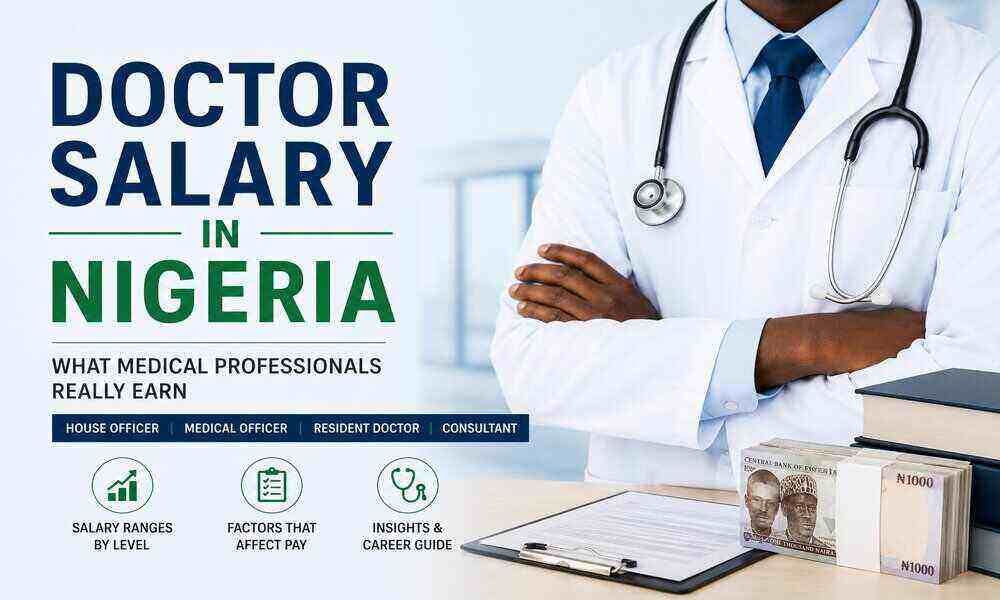
For years, medicine has been viewed as one of Nigeria’s most prestigious professions. Many students enter medical school believing that becoming a doctor automatically guarantees financial success.
However, the reality is far more than that.
While doctors are among the most respected professionals in the country, their earnings vary significantly depending on experience, specialization, employer, and location. A newly qualified doctor may earn a modest salary compared to a consultant with years of specialist training.
So, how much do doctors actually earn in Nigeria today?
This article provides a realistic look at doctor salaries across different career levels and explains the factors that influence income in the medical profession.
Why Doctor Salaries Differ Across Nigeria
Unlike some professions where employees earn similar wages across organizations, medical salaries can vary considerably.
Several factors determine how much a doctor earns:
- Years of professional experience
- Government or private sector employment
- Medical specialty
- Geographic location
- Additional allowances
- Private practice opportunities
These factors create a wide salary range within the profession.
Entry-Level Earnings: The First Years After Medical School
The journey to becoming a doctor is long and demanding.
After spending six years in medical school, graduates must complete housemanship and the National Youth Service Corps (NYSC) before beginning independent medical practice.
During these early stages, salaries are often lower than many people expect.
House Officers
House officers are newly graduated doctors undergoing compulsory internship training.
Their monthly earnings typically range between:
₦180,000 and ₦300,000
This period focuses primarily on gaining clinical experience rather than maximizing income.
NYSC Doctors
Doctors serving during NYSC may receive:
- Federal NYSC allowance
- Hospital stipends
- State incentives in some locations
Combined earnings often fall between:
₦80,000 and ₦220,000 per month
The exact figure depends on the state and healthcare facility.
Medical Officers: The Beginning of Full Medical Practice
After completing internship and NYSC, doctors become eligible to work as Medical Officers.
At this level, they begin treating patients independently and assume greater professional responsibilities.
Government Hospitals
Medical Officers in federal and state hospitals often earn:
₦250,000 to ₦450,000 monthly
Additional allowances may increase take-home pay.
Private Hospitals
Private-sector salaries vary widely.
Typical earnings range from:
₦200,000 to ₦700,000 monthly
Large urban hospitals generally offer higher salaries than smaller clinics.
Doctor salaries can vary significantly depending on where they work. While government hospitals generally offer structured pay and allowances, some private hospitals provide higher earning potential for experienced doctors. Read our detailed comparison of Government vs Private Hospital Salaries for Doctors in Nigeria to see which sector pays better.
Resident Doctors and Specialist Training
Doctors who decide to specialize enter residency programs.
Residency is a demanding stage that combines work, training, research, and professional examinations.
Junior Resident Doctors
Average monthly earnings:
- ₦350,000 to ₦550,000
Senior Resident Doctors
Average monthly earnings:
- ₦500,000 to ₦800,000+
Residents often work long hours while preparing for specialist certification exams.
Consultant Doctors: The Peak of Medical Practice
Consultants are doctors who have completed specialist training and earned fellowship qualifications.
They represent the highest level of clinical expertise in the profession.
Depending on specialty and employer, consultants can earn:
- ₦800,000 to ₦2 million+ monthly
Those involved in private practice may earn considerably more.
Specialists in fields such as surgery, cardiology, orthopedics, radiology, and neurology are often among the highest earners.
Additional Sources of Income for Doctors
One of the biggest misconceptions about medicine is that doctors rely solely on salaries.
Many experienced doctors generate income from multiple sources.
Common examples include:
Private Clinics
Doctors who own clinics can earn significantly beyond their regular salaries.
Specialist Procedures
Consultants often receive additional compensation for specialized treatments and surgeries.
Medical Consultancy
Organizations, insurance companies, and healthcare firms frequently hire doctors as consultants.
Academic Positions
Teaching hospitals and universities provide additional income opportunities through lectures and research activities.
Telemedicine
Online healthcare consultations have become an increasingly popular source of income.
Which Medical Specialties Earn the Most?
Although all doctors receive professional training, some specialties typically offer higher earning potential.
Among the most lucrative specialties are:
- Neurosurgery
- Cardiology
- Orthopedic Surgery
- Plastic Surgery
- Radiology
- Anesthesiology
- Obstetrics and Gynecology
These fields often require additional years of training but can provide substantial financial rewards.
Specialization is one of the biggest factors affecting a doctor’s earnings. If you’re curious about the journey from medical school to consultancy, check out our article on How Long Does It Take to Become a Consultant Doctor in Nigeria?
Why Some Doctors Are Still Leaving Nigeria
Despite respectable salaries for experienced professionals, many Nigerian doctors continue to relocate abroad.
Several factors contribute to this trend:
- Better working conditions
- Higher international salaries
- Improved healthcare infrastructure
- More research opportunities
- Better work-life balance
Countries such as the United Kingdom, Canada, Australia, and Saudi Arabia remain popular destinations for Nigerian medical professionals.
Is Medicine Financially Worth It?
Medicine is not a quick path to wealth.
Becoming a doctor requires years of education, training, examinations, and professional development.
However, for those who remain committed to the profession, earning potential generally increases with experience and specialization.
The highest rewards often come later in a doctor’s career rather than during the early years.
The Future of Doctor Salaries in Nigeria
Nigeria’s healthcare sector continues to evolve.
Growing demand for healthcare services, specialist shortages, and ongoing reforms could influence salary structures in the coming years.
Many healthcare experts believe that improving compensation and working conditions will be essential for retaining skilled medical professionals within the country.
Salary is only one reason doctors consider working overseas. Better healthcare infrastructure, career growth opportunities, and improved working conditions are also major factors. Read our analysis of Countries Nigerian Doctors Are Relocating To and Why.
Conclusion
Doctor salaries in Nigeria vary widely depending on career stage, specialization, and workplace.
While newly qualified doctors may earn modest incomes, experienced specialists and consultants can achieve substantial earnings through salaries, allowances, and private practice.
For aspiring doctors, the profession offers more than financial rewards. It provides opportunities to make a meaningful impact on lives while building a respected and potentially lucrative long-term career.